Navigating Virtual TOP/CSC: A Guide for Singapore's Construction Industry
|
13
min read

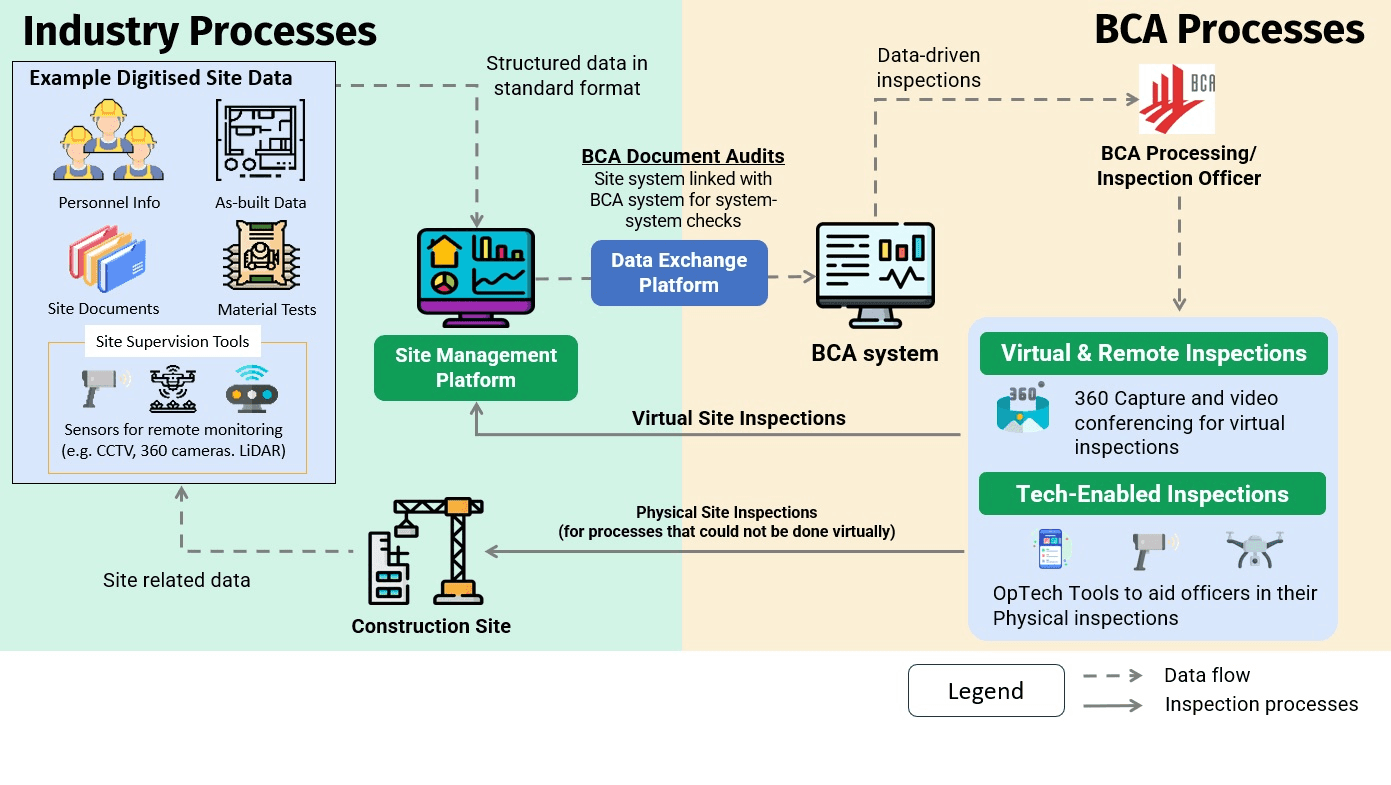
Singapore's construction sector is continually evolving, embracing innovative technologies to enhance efficiency and productivity. A significant development in this landscape is the increasing adoption of virtual inspections, particularly for Temporary Occupation Permit (TOP) and Certificate of Statutory Completion (CSC) processes. The Building and Construction Authority (BCA) is actively promoting the use of smart inspection technologies like 360 Capture and Site Management Platforms (SMPs) to streamline industry processes.
The Rise of Virtual TOP/CSC
The Virtual TOP/CSC initiative, as formally communicated through a circular dated March 3, 2025, is a strategic move by the Building and Construction Authority (BCA) aimed at modernizing and improving the construction industry.
The background for this significant initiative, as established by the circular, stems from BCA's overarching objective to:
Streamline industry processes and raise productivity within the construction sector.
Encourage the adoption of smart inspection technology
In essence, the circular establishes the importance of Virtual TOP/CSC by indicating that 360 Capture technology is being promoted by BCA to:
Serve as an alternate means for Temporary Occupation Permit (TOP) or Certificate of Statutory Completion (CSC) inspection purposes. This means virtual inspections, using 360-degree photos and videos to create virtual representations of project sites, can now be used for regulatory checks.
Enable project teams and parties to conduct virtual inspections without the need to physically go to the project site. This directly contributes to the goal of enhancing productivity and improving the efficiency and effectiveness of inspection processes.
Allow project teams to record and keep track of construction progress, thereby complementing existing regulatory requirements and streamlining current site inspection workflows. While physical inspections may still be necessary in some situations, 360 Capture is useful for hybrid inspections, reducing resources while meeting objectives.
The circular is distributed to a wide range of industry stakeholders, including architectural, engineering, contracting, and real estate associations, as well as various government agencies, highlighting the widespread impact and importance of this initiative.
Key Benefits of Virtual Inspection
The adoption of virtual inspection methods, particularly through 360 Capture, offers several key benefits for the construction industry:
Enhanced Productivity and Efficiency: Virtual inspections streamline industry processes, making inspections more efficient and effective. They enable project teams to record and track construction progress remotely.
Reduced Need for Physical Presence: Inspections can be conducted virtually, minimizing the need for physical site visits by inspectors. This reduces the resources required for inspections while still ensuring objectives are met.
Improved Documentation and Communication: 360 Capture provides more comprehensive and faster documentation of site details compared to compiling 2D photos. It also improves communication among all project parties and regulators.
Increased Safety: The use of 360 Capture has the potential to make site inspections safer.
Use Cases for Virtual Inspection in Singapore
BCA accepts 360 Capture as an alternative form of inspection evidence for TOP/CSC issuance, to be rolled out in phases, starting with building typologies that have typical and standardized designs. The use of 360 Capture is accepted for both Full Virtual Inspections and Hybrid Inspections.
Projects eligible for Full Virtual Inspections include:
Newly erected landed houses by a Developer.
Newly erected industrial buildings with typical floor plans.
Parks and standalone structures (such as shelters, bus stops, and linkways).
Newly erected HDB residential blocks in partial TOP phases (specifically, the second partial phase and beyond; the first and last residential blocks and all mixed-use spaces still require physical inspection).
Additions & Alterations (A&A) works in localized areas (for larger A&A works, QPs should discuss with a BCA Officer).
Projects suitable for Hybrid Inspections include:
Residential buildings in private condominium projects with typical designs.
Hotel room floors in commercial projects with typical designs.
Office spaces in commercial projects with typical designs.
Institutional projects, such as schools and nursing homes, that are of typical design.
For hybrid inspections, the Project Team can capture 360-degree imagery for the entire project, but only selected areas will be accepted for virtual inspection, supplemented by physical inspections by BCA for the remaining areas.
Beyond regulatory inspections, project teams can leverage 360 Capture to track site progress, conduct site supervision, and improve communication among project parties and regulators.
The Virtual Inspection Process
The virtual inspection process for TOP/CSC can be divided into four key stages:
Assessing Project Suitability for Virtual Inspections: The Supervising Qualified Person (QP) first assesses if the project is suitable for a full or hybrid virtual inspection and then submits a request to BCA for confirmation.
Preparing for 360 Capture: The Project Team must obtain the necessary tools, including a 360 Capture platform, 360 cameras, and accessories. They must ensure all works are completed and the captured areas are in a TOP-ready condition, and that site conditions are suitable for capturing.
Conducting the Virtual Capture: The QP instructs the capture according to the Virtual Inspection Plan. The Project Team attaches close-up measurements to demonstrate compliance, and the QP provides BCA access to view the capture.
Submission and Reviewing of the 360 Capture: The BCA reviews the submitted capture to identify areas needing clarification, instances of non-compliance, or observations. The QP is then required to provide clarifications and attach supporting documents. Once all clarifications are deemed satisfactory, BCA closes the inspection process.
To initiate the process, the Supervising QP must book an inspection through BCA's portal and complete a Virtual Inspection Plan for review by the BCA Processing Officer. A pre-consultation session with BCA is required, which can be booked through BCA’s Online Feedback Form or by contacting the BCA Processing Officer. This session should ideally be arranged more than three days before the inspection booking date to avoid potential rejection of the virtual inspection request.
How Firms Can Get Started
For construction firms looking to adopt virtual inspections, a clear action plan is essential:
Assess Project Suitability: The Supervising QP should evaluate whether your current or upcoming projects align with the types accepted for Full Virtual Inspections (e.g., newly erected landed houses by developers, industrial buildings with typical floor plans, HDB residential blocks in partial TOP phases) or Hybrid Inspections (e.g., residential buildings in private condominiums, hotel room/office floors in commercial projects, institutional projects with typical designs).
Initiate Pre-Consultation with BCA: Before applying for virtual inspection, the Supervising QP must arrange a pre-consultation session with BCA. This can be done by contacting the BCA Processing Officer or using BCA’s Online Feedback Form. Ensure this is done well in advance, ideally more than three working days before your intended inspection booking date.
Develop a Virtual Inspection Plan: Based on BCA’s feedback from the pre-consultation, prepare a detailed Virtual Inspection Plan. This plan should include a list of all areas for scanning, a timeline for multiple submissions (if applicable, ensuring all virtual scans are submitted within a maximum of three months), and visual indications of scan zones (clearly marking Typical and Non-Typical areas) on the Building Plan. Submit this plan to BCA for acceptance.
Acquire Necessary Tools:
360 Camera: Invest in a high-quality 360 camera that is compatible with Android and iOS devices, supports at least 6K resolution, is suitable for low-light conditions, and is equipped with dual one-inch CMOS sensors. It should also have a battery capacity for at least 60-90 minutes of continuous capture and six-axis stabilization.
360 Capture Platform: Select a platform that allows capturing with most 360 cameras, supports continuous, spot, or mixed captures, and can tie every photo to an uploaded building plan. The platform must enable comments and additional photo evidence to be attached to the 360 Capture and allow external parties, such as BCA inspectors, to access and tag comments on the capture. It should also facilitate the QP in attaching evidence of compliance and generating reports on comments.
Prepare Site and Operators: Ensure all construction works are fully completed and the site is cleaned up to a TOP-ready condition before capturing. Maintain good housekeeping for safety. Equip the operator with the camera, measuring tape for close-up measurements, and provide clear instructions.
Conduct the 360 Capture: Capture all areas listed in the approved Virtual Inspection Plan, including external areas, ensuring no deviation from approved plans. Attach adequate close-up measurements and any approved waivers within the 360 Capture platform. Follow best practices like maintaining camera stability (using accessories like monopod or hard hat mount), positioning the camera in the center of the path (minimum 2 meters from walls), capturing within a 5-10 meter radius, pausing at key areas for 2-3 seconds, and maintaining normal walking speed.
Perform Self-Checks and Submit: After capturing, verify that locations are accurately mapped to the digital plan, close-up measurements are provided, and the overall capture is in order. Once satisfactory, the Supervising QP emails the BCA Processing Officer, alerting them that the capture is ready and providing login instructions. For partial virtual scan submissions, also include the BCA-CSC-TOPCSCDQP (QP Declaration Form) and the updated Virtual Inspection Plan.
Address BCA Comments: Be prepared to attach photo evidence for rectification of non-compliance, observations, or to provide clarifications in response to BCA's comments. The platform should allow for standardized tags for communication.
Generate Closure Report: The QP must generate a site inspection closure report detailing all BCA comments on non-compliance and observation items, and their rectifications. This report, along with other TOP/CSC documents, must be submitted for certification.
BCA also recommends that Project Teams maximize the benefits of 360 Capture by using it for ongoing progress monitoring or internal checks and reporting, not solely for regulatory inspection clearances. Solution providers can offer additional technical details and training for using the platforms.
Where Virtual Inspection Is Headed
Virtual inspections, particularly through 360 Capture platforms, are envisioned to complement existing regulatory requirements and streamline current site inspection workflows. While they offer a flexible and efficient alternative, they are not intended to completely replace traditional physical site inspections. Physical inspections may still be necessary for non-typical layouts, when virtual submissions do not meet minimum standards, or for specific tasks requiring precise measurements or witnessing live operations.
The continuous evolution of this technology is anticipated, with the guidebook itself expected to be updated progressively. This suggests an ongoing effort by BCA to refine and improve the virtual inspection process, ensuring its continued relevance and effectiveness within Singapore's construction industry. The push for smart inspection technologies reflects a broader trend towards digitalization and increased productivity in the sector.